Is My Radon System Working?
If you bought a home with a radon system, or your system has been running for years, it can be hard to know what is normal. Here are the parts homeowners usually ask about and the signs that are worth checking.
Four things to check first
Is the pipe connected, intact, and still terminated the way you remember?
Is the fan humming quietly, loud/grinding, or silent?
Is the fluid uneven (usually means suction) or flat on both sides?
Flat gauge, weird fan noise, loose pipe or lid, or a high retest. Call Bill.
Details on each part are below. Not sure what you are seeing? Call or text a photo to Bill's cell at (815) 370-9682.
Start with the manometer
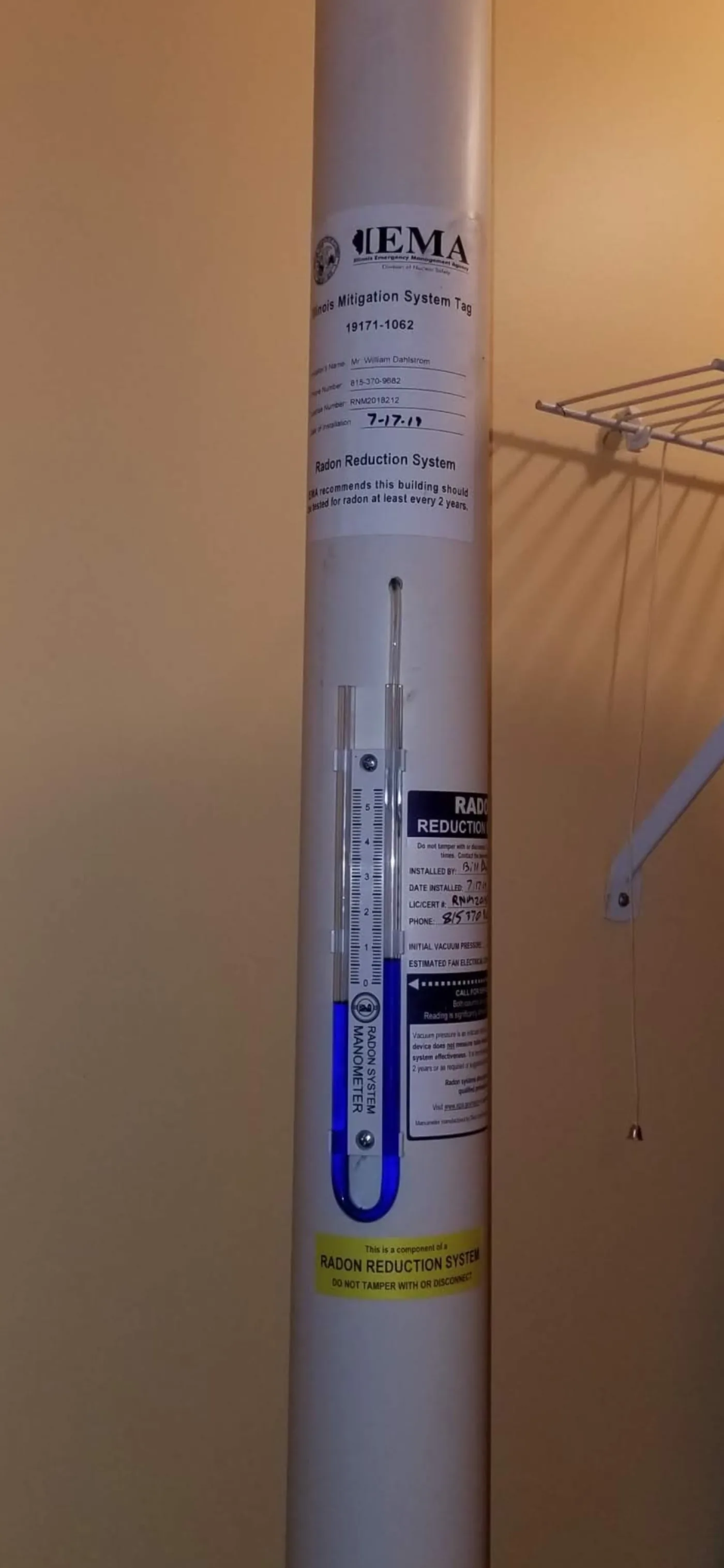
The clear U-shaped gauge on many radon systems is called a U-tube manometer. It shows whether the fan is still applying suction to the system.
The manometer is not a radon test. The only way to know the radon level in the home is to test the home.
Uneven fluid usually means the fan is pulling. If both sides are level or flat, the system may not be pulling suction and should be checked. A working fan is usually quiet but often makes a soft hum or whisper of air up close; the manometer is the better confirmation. Not sure what you are looking at? Call or text a photo to Bill's cell at (815) 370-9682. That is his cell phone.
What homeowners usually ask about
The radon fan
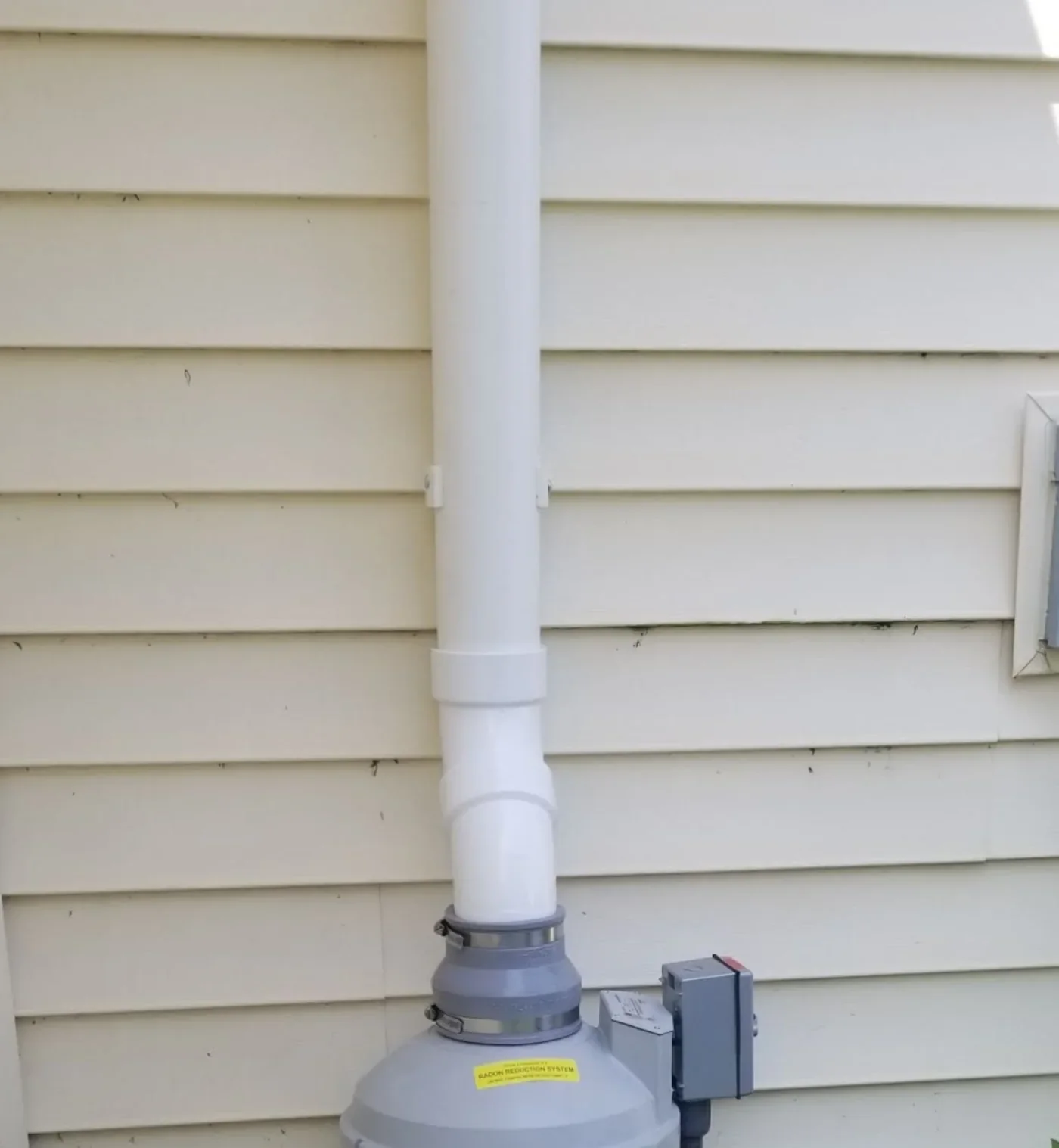
The fan runs continuously, usually with a soft, steady sound of air moving through the pipe. A new rattle, grinding noise, or vibration should be checked. If it becomes silent, check the manometer. Send us your town and a clear photo of the fan and gauge if the sound or reading has changed.
Fan replacement and repair - learn more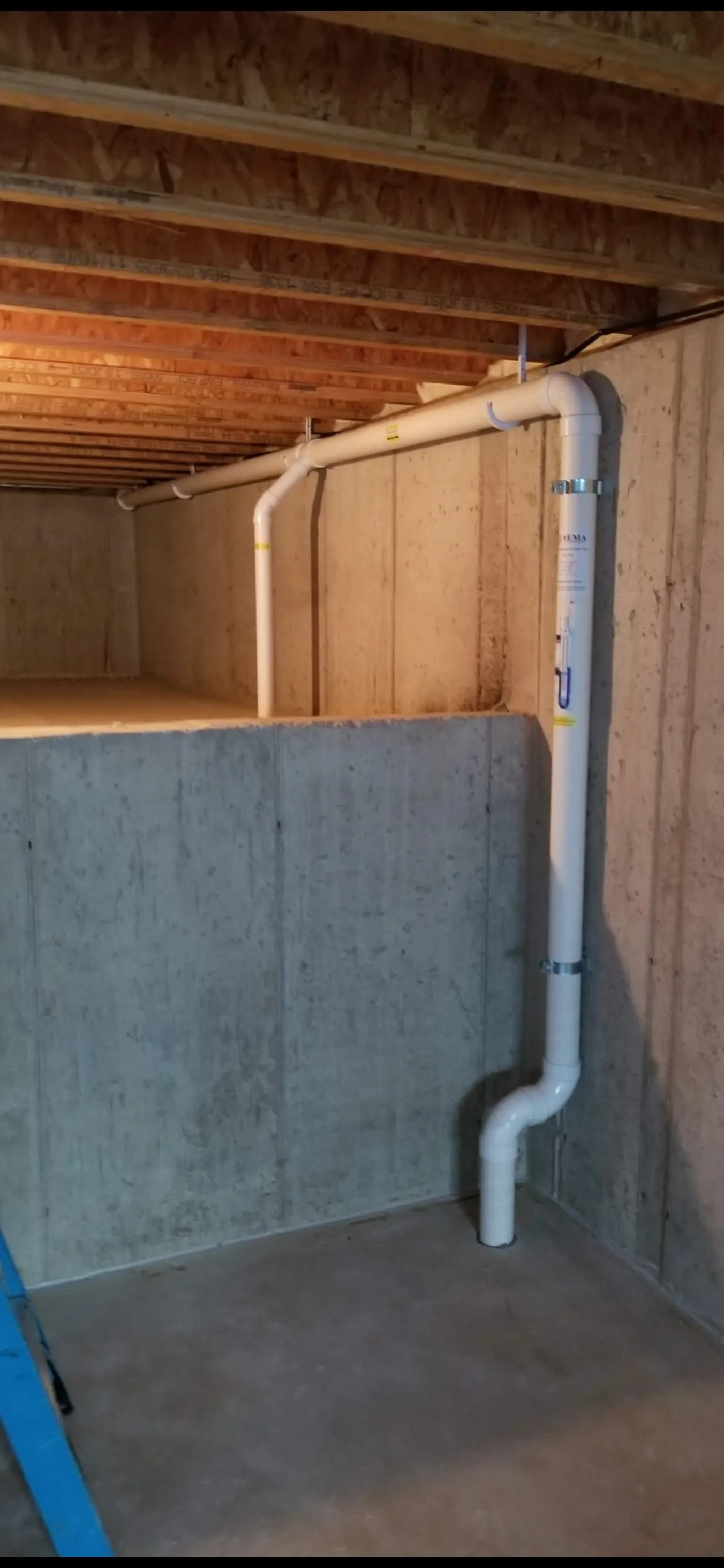
The pipe
The pipe moves soil gas out of the home. Loose, cracked, disconnected, or oddly routed pipe is worth having Bill look at.
The sump lid
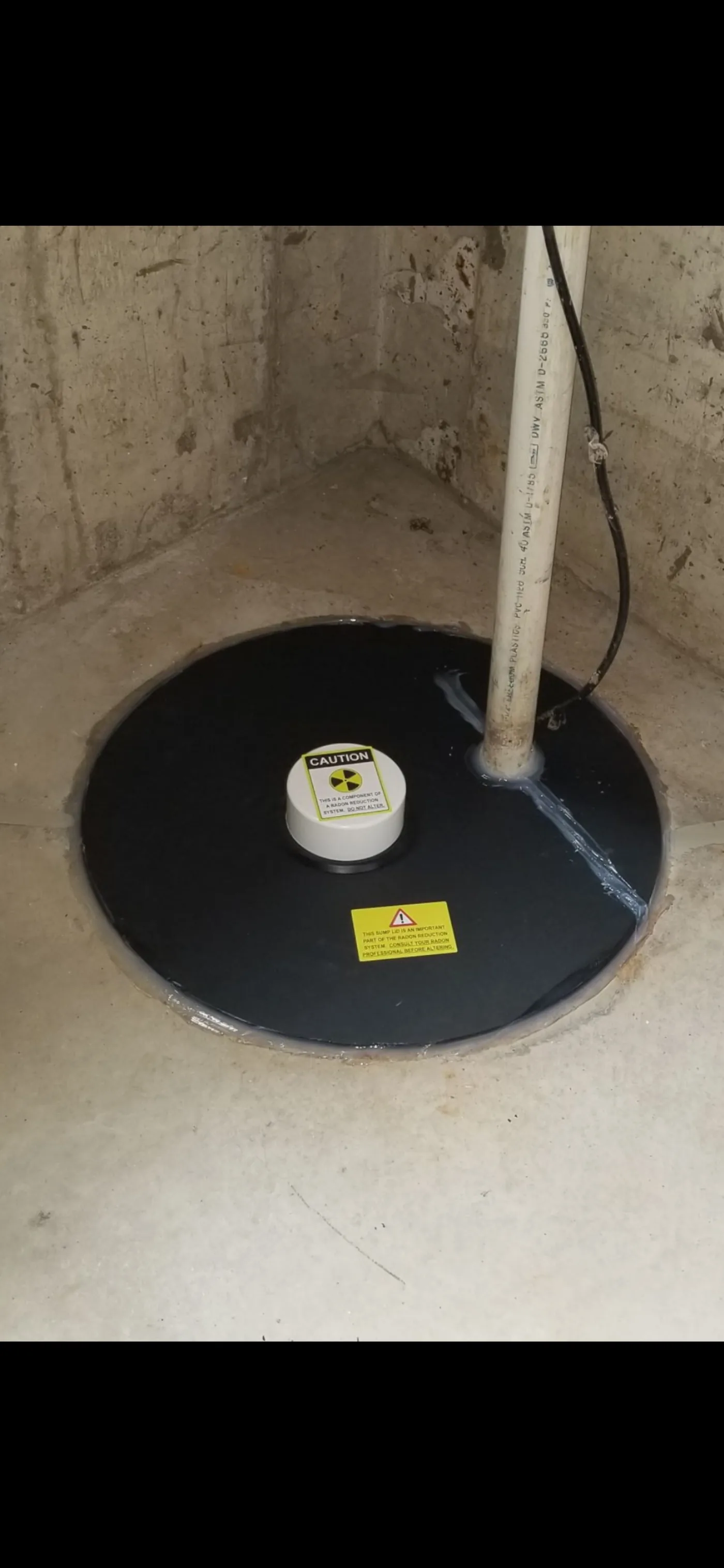
A sealed sump lid helps the system pull from the right place. Access still matters, because the sump pump has to remain serviceable.
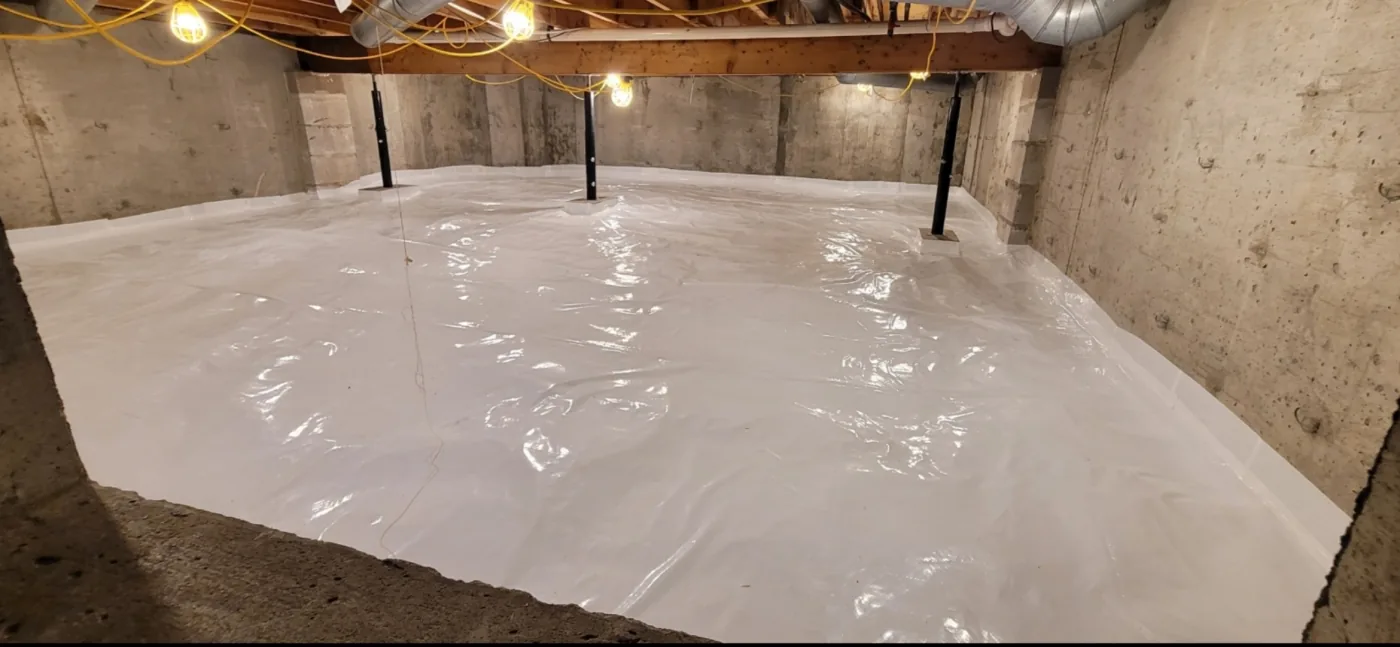
Crawlspace plastic
Crawlspace systems rely on sealed plastic and barrier details. Loose seams or torn plastic can affect how well the system pulls.
The exterior vent
The vent pipe should carry discharge safely outside and above the roofline. If the pipe looks loose, damaged, oddly terminated, or different than it used to, send a photo or call Bill.
If you are trying to understand how a full installation is planned, see what to expect during install. If you want the visible parts, fan, and gauge checked over, see Radon System Inspection & Checkup.
What photos help Bill
- The fan and the fan label, if it is reachable safely.
- The manometer on the pipe.
- The sump lid or suction point.
- The exterior pipe from the fan up to the roofline.
- Any crawlspace plastic, loose seams, or torn areas.
Signs worth checking
The manometer is flat or the reading changed noticeably.
The fan is loud, grinding, rattling, vibrating, or not running.
A pipe looks disconnected, cracked, loose, or unfinished.
The sump lid is loose or no longer sealed well.
Crawlspace plastic is torn or seams have opened up.
A radon retest came back elevated.
“Great team! Professional installers & responded recently to an issue with a loud fan. They were quick to answer my call and quick to perform repairs.”
Is It Working? Quick Answers
What the fan should sound like, how to read the gauge, and what a silent or noisy fan usually means.
Does the radon fan run all the time?
Yes. A healthy mitigation fan runs continuously, and it should not be switched off in winter or while you are away. Whenever it is off, soil gas has its normal path back into the house, and the system gives no protection until it is running again. In our experience, running it year-round adds roughly $60 to $125 a year to the electric bill, depending on the fan and your rate. A light steady hum can be normal. If it gets loud, rattles, or goes silent, call Bill; that is a service call, not a switch.
Is sealing the sump necessary for radon mitigation?
Often yes. An open sump is a common soil-gas path. We typically seal the sump with a lid that still allows pump service and access. Sealing alone is not a full mitigation system, but a proper lid is usually part of a good design when a sump is present.
My radon fan is noisy. What does that mean?
A fan that becomes noticeably louder, rattles, grinds, hums, or sends vibration through the wall may be wearing out or may have another system issue that should be checked. We can typically come out the same day or the next day, including systems another company installed. There is no trip charge. A fan replacement is $575, including the fan, the visit, the labor, and a new five-year fan warranty, and Bill confirms that before the visit. If the failed fan is one we installed and it is within the five-year warranty, the service visit, labor and replacement fan are included at no cost. Call or text Bill’s cell at (815) 370-9682 with a clear photo of the fan and manometer.
My radon fan is silent. Is it broken?
A properly working radon fan is not perfectly silent. Most produce a soft, steady sound of air moving through the pipe. If the system becomes completely silent, check the U-tube manometer. A working U-tube manometer normally shows the two liquid columns at different heights. If the columns are level with each other, the system is not showing suction. The manometer shows suction, not the radon level in the home. Call or text a photo to Bill’s cell. Same-day or next-day service in most cases.
How do I read the U-tube manometer?
The manometer is the small clear U-shaped gauge on the pipe. It shows suction, not the radon level in the home. Uneven liquid levels usually indicate suction. If both sides are level with each other, the system is not showing suction. If the reading changes substantially from its usual mark or the fan sounds different, send Bill a clear photo of the fan and manometer at (815) 370-9682 (his cell).
Can you service my radon fan brand?
Almost always. We work on RadonAway, Fantech, Festa, and other common radon fan brands, including systems another company installed. If you are not sure what you have, text Bill a photo of the fan label and the U-tube manometer.
Does a radon system need maintenance?
Very little. Glance at the U-tube manometer now and then to confirm the liquid is uneven, listen for the soft, steady sound of the fan, make sure the outside pipe and fan look secure, and leave sump lids and sealed openings alone. Retest every two years. Call or text Bill if the gauge goes flat, the fan gets loud or silent, or anything gets damaged.
Can a radon system freeze up in winter?
Yes. Any radon system can ice up if it gets cold enough. The fan pushes warm, damp soil air up the pipe, and in a hard freeze that moisture can frost over inside the top of the pipe and choke the airflow for a while. It clears on its own when temperatures come back up, and there is no reason to shut the fan off. Here is the part worth knowing. Radon risk comes from your average exposure over years, not from one cold snap. EPA bases the health risk on long-term exposure. Say the pipe iced up for two full weeks and the house went back to its untreated level the whole time. That is two weeks out of fifty-two. The other fifty weeks the system is pulling the level down as usual, so your yearly average moves only a little. If the fan sounds different or the gauge sits far from its usual mark after the thaw, send Bill a photo at (815) 370-9682.
Related radon guides
Helpful official radon resources
Last reviewed by American Radon Systems: June 2026
- CDC reducing radon levels in your home
Explains common radon reduction systems, including vent pipe and fan systems.
- U.S. EPA radon overview
Federal radon guidance, including why testing is the way to know a home's level.
- Illinois IEMA-OHS Radon Program
Illinois radon program information and licensing context.
Reviewed by Bill Dahlstrom, Illinois radon mitigation license RNM2018212.
Not sure what you are looking at?
Send a few photos or call Bill. We can usually point you in the right direction.