Before You Finish Your Basement, Test for Radon
If you are planning drywall, flooring, ceilings, or built-ins, radon is easier to think through before everything is closed up.
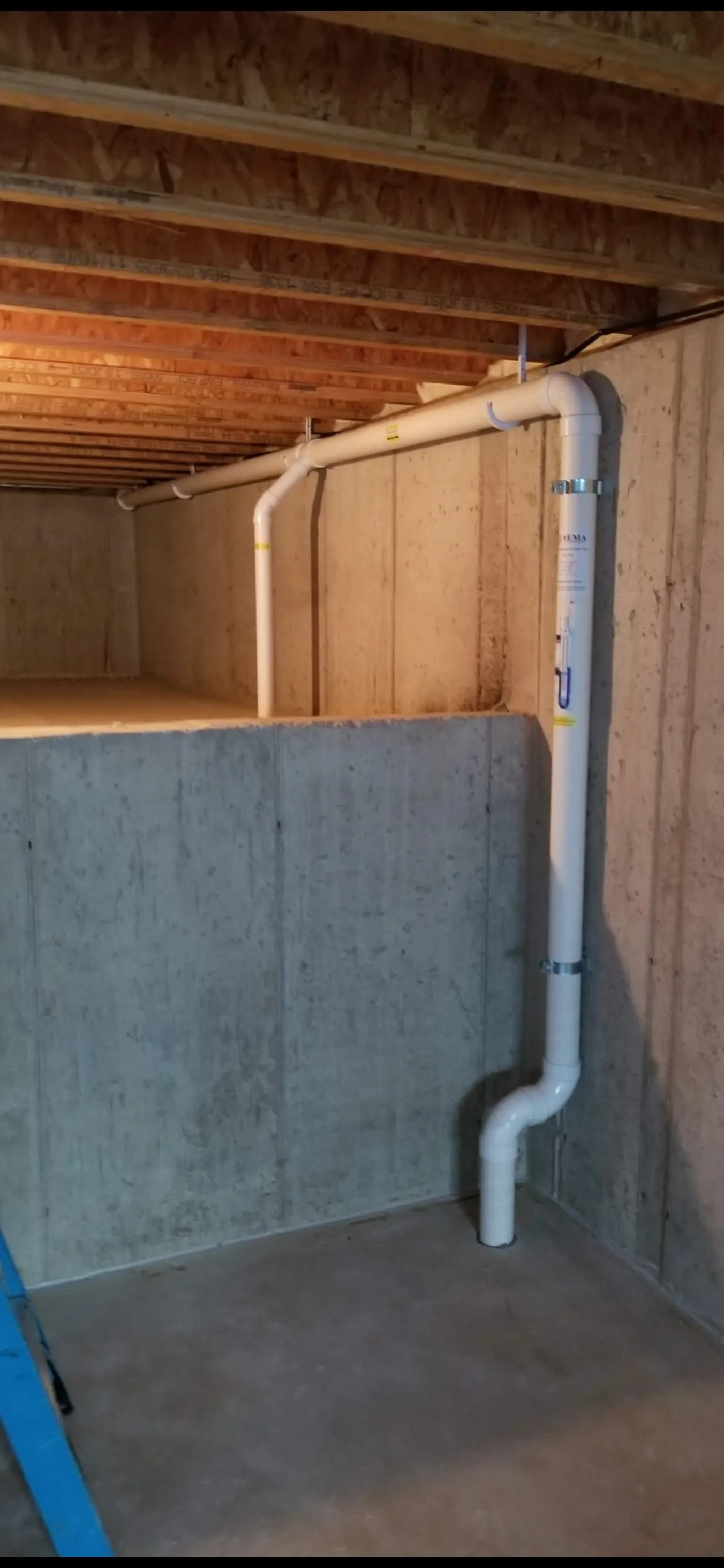
It is easier to plan before finishes are in the way
Pipe routes, sump access, ceiling areas, and exterior exit points are easier to think through before finished materials are installed. The CDC recommends testing before major renovations when possible. A short conversation before the remodel continues can help avoid awkward routing later.
If your test comes back elevated, Bill can stop out, look at your home, and explain what makes sense before your basement is closed up.
Already have a radon system and the pipe or fan conflicts with the remodel? The system may be able to be relocated or rerouted instead of torn out and started over.
What gets harder after the basement is finished
Finished ceilings can limit clean pipe routes.
Built-ins can block corners, walls, and mechanical access.
New flooring can make drilling and sealing more disruptive.
Hidden sump access can create problems for both radon and pump service.
Tight mechanical rooms leave fewer clean choices.
If your test comes back elevated
Bill can look at your home and explain the practical choices before the remodel continues. The goal is not to make the project bigger than it needs to be. It is to plan the system around your home while access is still available.
If your basement is already finished
You are not out of options. Radon systems can still be installed in finished homes. It just takes more care around routing, sump access, exterior placement, and the finished areas you want protected.
For a look at how installation day works, see what to expect during a radon mitigation install.
Good questions to ask before closing walls and ceilings
Where is the sump pit?
Is there crawlspace access?
Where could pipe route cleanly?
Where would an exterior fan make sense?
Will future access be blocked?
Still testing?
Testing is the only way to know the level in a specific home. If you are not sure what kind of test makes sense, start with the testing guidance page.
Radon testing guidance - learn moreFind more reviewed testing, mitigation, and homeowner guidance in the Radon Resource Center.
“Top notch job. Bill and his crew installed a 2 suction point system, 1 point in the basement and 1 in the crawlspace addition. Along with the suction points, they laid down a vapor barrier in the crawl space, a new sump pump cover and caulked any cracks in the…”
Basement Planning Questions
Testing before the remodel, sump sealing, how the pipe gets routed, and how long the install takes.
How long does a typical radon mitigation install take?
Most residential installs are completed in a single visit, often a few hours once the plan is set. Bill looks at the home first so materials and routing are right. Real estate closings get scheduled around the calendar when you tell us the date early.
Is sealing the sump necessary for radon mitigation?
Often yes. An open sump is a common soil-gas path. We typically seal the sump with a lid that still allows pump service and access. Sealing alone is not a full mitigation system, but a proper lid is usually part of a good design when a sump is present.
Will the exterior pipe look bad on my house?
We plan routing carefully. Where the layout allows, pipe may go through a garage attic or interior chase and out the roof. When the cleanest path is outside, it goes on a side or rear elevation and is finished to read more like a downspout than a mistake on the front of the home.
Should I test for radon before finishing the basement?
Yes. Testing before drywall and ceilings makes routing and planning easier if mitigation is needed. Remodeling can also change how the lower level is used. If levels are elevated, handle mitigation with the finish plan in mind.
Can I just seal the cracks and the sump instead of installing a system?
Sealing by itself is not a fix. Illinois guidance does not recommend sealing alone because it has not been shown to lower radon levels significantly or consistently; soil gas finds the next opening. Sealing matters as part of an active system, where the sump lid and openings are closed so the fan’s suction stays under the slab instead of pulling room air.
Related radon guides
Helpful official radon resources
Last reviewed by American Radon Systems: June 2026
- CDC testing for radon in your home
Includes guidance on testing before major renovations and after work is completed.
- EPA explanation of the 4.0 pCi/L action level
Federal guidance on when EPA recommends fixing a home.
- Illinois IEMA-OHS Radon Program
Illinois radon program information for homeowners.
Reviewed by Bill Dahlstrom, Illinois radon mitigation license RNM2018212.
Before you close everything up
Call Bill or send your information. A short conversation now can save a lot of frustration later.