What Radon Mitigation Costs in 2026
Our real ranges for south-suburban homes, what changes the number, and why Bill still looks at the home before giving a firm price.
If you are closing soon, say so. Schedule and paperwork matter as much as the pipe route.
Reviewed by Bill Dahlstrom, Illinois radon mitigation license RNM2018212.
These are our local price ranges. Foundation type, crawl spaces, finished areas, and pipe routing affect the final quote. We look at your home and give you the price in writing before scheduling work.
The Short Answer
- Passive system activation in a newer home: starting at $900. Call for details. The piping is already built in, so it is the least involved job we do.
- A full new system in a typical basement or slab home: $2,000 to $2,500. One suction point at the slab or sump, piping to a fan, and a proper termination above the roofline.
- Homes that need much more work: $4,000 to $6,500. A gravel crawlspace that has to be sealed with a vapor barrier before a system can work, a basement plus a crawlspace, or a large or sectioned foundation that needs more than one suction area.
- Radon fan replacement: $575, including the fan, visit, labor, and a new five-year fan warranty.
No trip charge for the look, and nothing is scheduled until you have the price in writing. We accept check, Zelle, Venmo, and credit cards. The card processor adds a 3% fee for credit card payments, shown before you pay.
What Jobs Usually Cost Around Here
Passive system activation
Starting at $900. Call for details. Illinois has required passive radon piping in new homes since June 1, 2013, so the pipe is already built in. Bill checks the piping, adds the fan and the manometer, and confirms the system is actually pulling.
New whole-home system
$2,000 to $2,500 for most homes. One suction point at the slab or sump, piping to a fan, and a proper termination above the roofline. Finished space and the pipe route move the number within the range.
Crawlspace system with sealed vapor barrier
Often $4,000 to $6,500. A gravel crawlspace has to be fully sealed before a system can work, and a home with both a basement and a crawlspace needs each area handled.
Block-wall foundation systems
Often a higher-range project because hollow block walls can need their own depressurization approach. It is one of the most involved categories, and Bill prices it at the home.
Radon fan replacement
$575, including the fan, the visit, and the labor. No trip charge, and the new fan carries our five-year fan warranty. Credit card payments carry a 3% processing fee, shown before payment. We can usually come out within a day or two, including systems another company installed. If the failed fan is one we installed and it is within the five-year warranty, the service visit, labor and replacement fan are included at no cost.
Running the system
Radon fans run continuously. EPA says a fan will slightly increase your electric bill. In our experience that is roughly $60 to $125 a year, depending on the fan and your rate, plus a small amount of conditioned air pulled from the home.
What Actually Moves the Number
- Foundation combination. A home with both a basement and a crawlspace gets a suction point for each area.
- The routing path. Through the garage and garage attic, through the home and out the roof, or out the side and up past the roofline.
- What is under the slab. How well air moves beneath the concrete decides how much suction the system needs.
- The sump situation. Sealing a sump lid while keeping the pump serviceable is routine, but the pit location and condition shape the design.
- A finished basement. Finished space makes routing choices matter more because nobody wants pipe through the middle of a finished family room.
- Fan sizing. Bigger homes, tighter sub-slab material, or multiple suction areas can call for a stronger fan.
“Quick personal response, competitive quote, professional installation, and excellent communication. Couldnt be more satisfied! I highly recommend American Radon Systems!”
How We Price, in Plain Terms
Bill looks at your home first, then prices. We do not price sight unseen because guessing is how you end up with surprise add-ons.
The price is stated before any work begins. The price we give you before work begins is the price, unless you ask us to change the scope.
No trip charge, in any of our service areas.
If your home already has a system and the problem is just the fan, we say so. A fan replacement visit is a normal call for us, not a downsell.
Ask what work the written price covers: a new system, activation of existing piping, or a fan replacement. The quote should explain the route, included work, warranty, payment fees, and any work priced separately. We look at your home before quoting a new system.
Comparing Quotes
- Is the company state licensed for mitigation in Illinois? Ask for the license number. Ours is RNM2018212.
- Does the design give every foundation area its own suction point?
- Where does the pipe run, and what will it look like from the street?
- How was the fan size selected for this home?
- Does the system include a manometer so you can see it working?
- If a real estate closing is involved, will the paperwork be ready when the file needs it?
Want to Know What Your Home Actually Needs?
Send your info and we'll help you figure out the next step, or call or text Bill at (815) 370-9682. You do not need your test number handy. No trip charge.
Radon Mitigation Cost Questions
How much does radon mitigation cost?
Passive system activation starts at $900. A full new system runs $2,000 to $2,500 for most homes. A few homes need much more, up to $4,000 to $6,500 for a gravel crawlspace that has to be sealed or a home with more than one foundation type. Fan replacement on an existing system is $575. Bill looks at the home first, then gives you the price before work starts, and that number does not change unless you change the job. See our cost page for what moves the number.
Why is there a range on the website instead of an exact price?
Because the home decides the system. The ranges are ours, from the work we do around here, so they are a real starting point. A single exact number without seeing the foundation would be a guess. Bill reviews the home, explains the plan, and states the price before install. No trip charge for the look.
What is your warranty?
If a fan we install fails during the first five years, we replace it at no cost to the homeowner. The service visit, labor, and replacement fan are all included. A replacement fan installed under warranty receives its own five-year term. Ordinary fan replacement outside warranty is $575, including the fan, the visit, the labor, and a new five-year term. No trip charge. Details, including transferability, are in your customer packet after install.
Do you guarantee the radon level will come down?
Yes. If a qualifying test during the warranty period shows radon above 3.9 pCi/L, contact us. We come back, do the additional mitigation work at no charge to you, and pay for the professional retest afterward. That is the guarantee on the standard systems that make up nearly all of our work, and Illinois requires it to be spelled out in the written proposal you accept before we start. Your proposal is the place to read the exact terms for your home.
How can I pay for the work?
Check, Zelle, or Venmo. Credit cards work too. The card processor adds a 3% processing fee on credit card payments, and you see that fee before you pay.
Is $900 the price for a whole new system?
No. $900 is where passive system activation starts in a newer home, because the piping is already built in and we are adding the fan and the gauge. A full new system in a basement or slab home runs $2,000 to $2,500 for most homes, and a gravel crawlspace or a home with more than one foundation type can run $4,000 to $6,500. Bill tells you which job your home is before anything is scheduled.
What makes one home's system cost more than another's?
Mostly foundation layout. A home with a basement plus a crawlspace needs each area handled, a crawlspace needs a sealed vapor barrier, and hollow block walls need their own approach. Routing length and fan sizing do the rest. The home style matters more than the home price tag.
How much does it cost to run a radon fan?
Radon fans run around the clock. EPA says a fan will slightly increase your electric bill. In our experience that is roughly $60 to $125 a year, depending on the fan and your rate, plus a small amount of conditioned air pulled from the home. A correctly sized fan keeps that as low as the design allows.
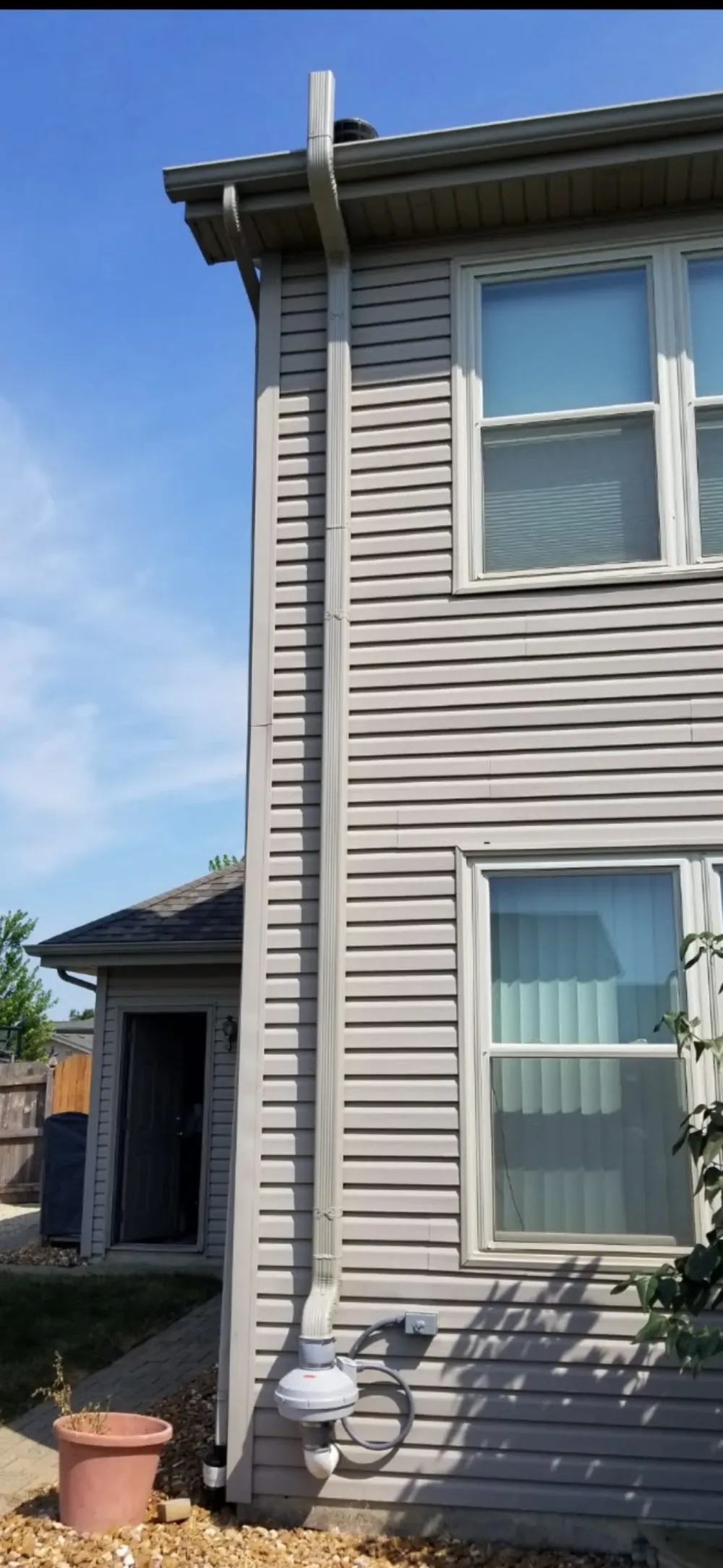
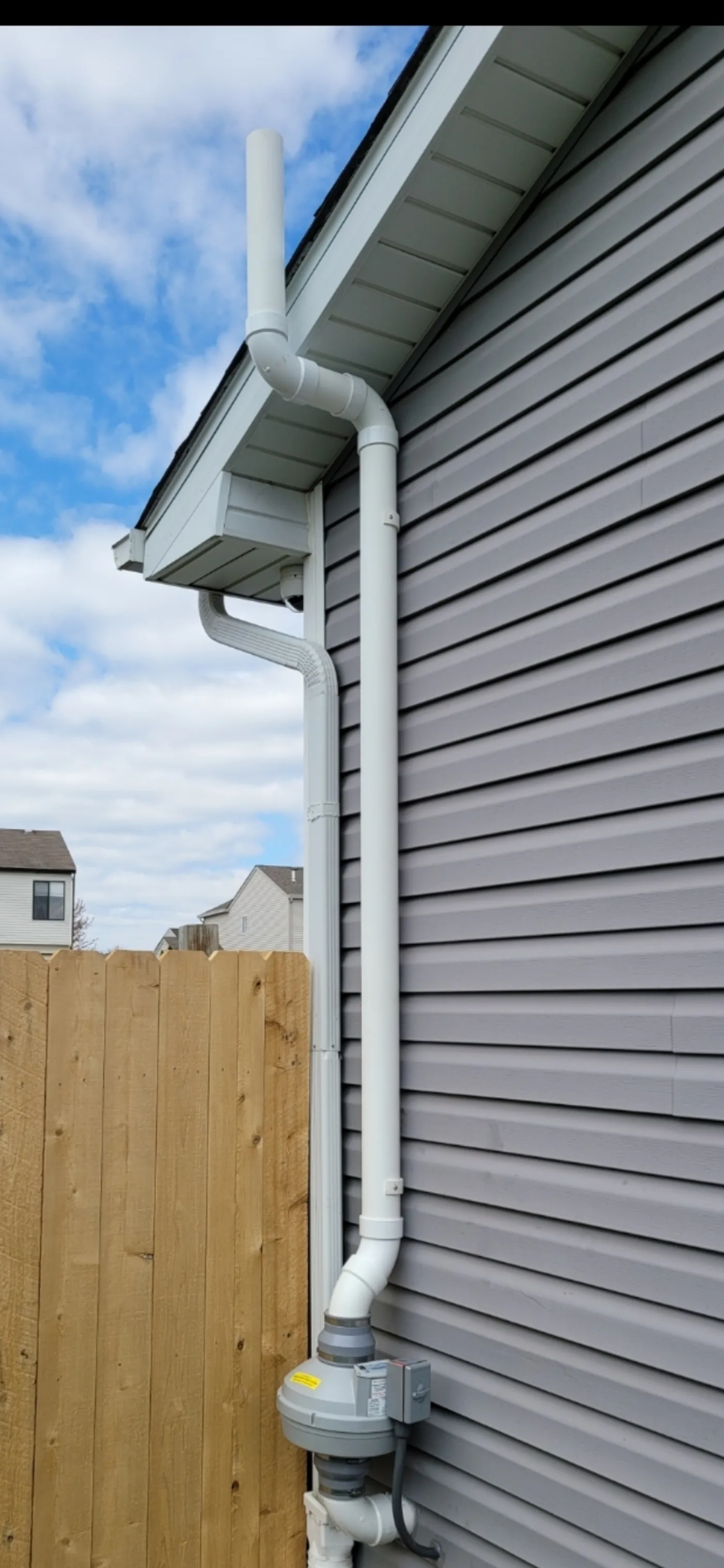
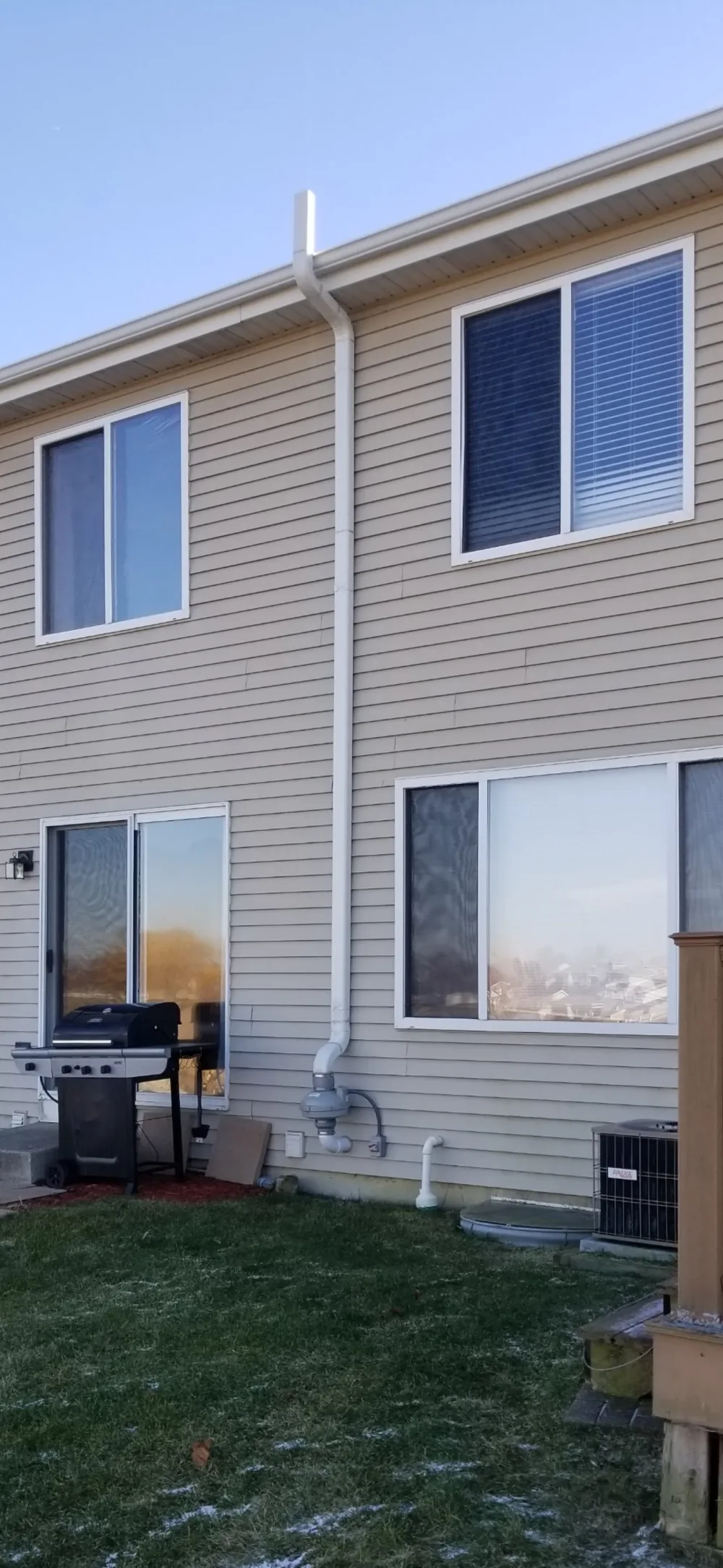
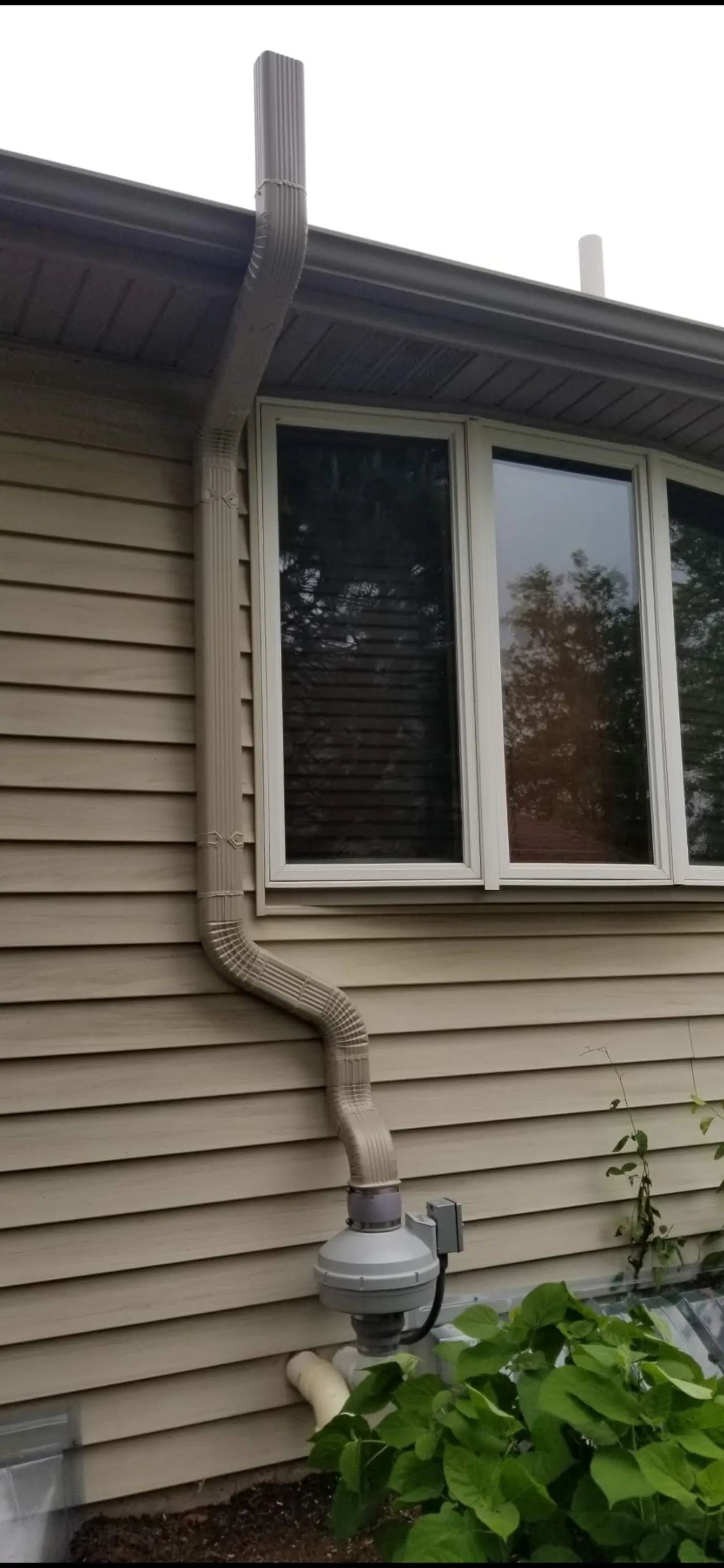
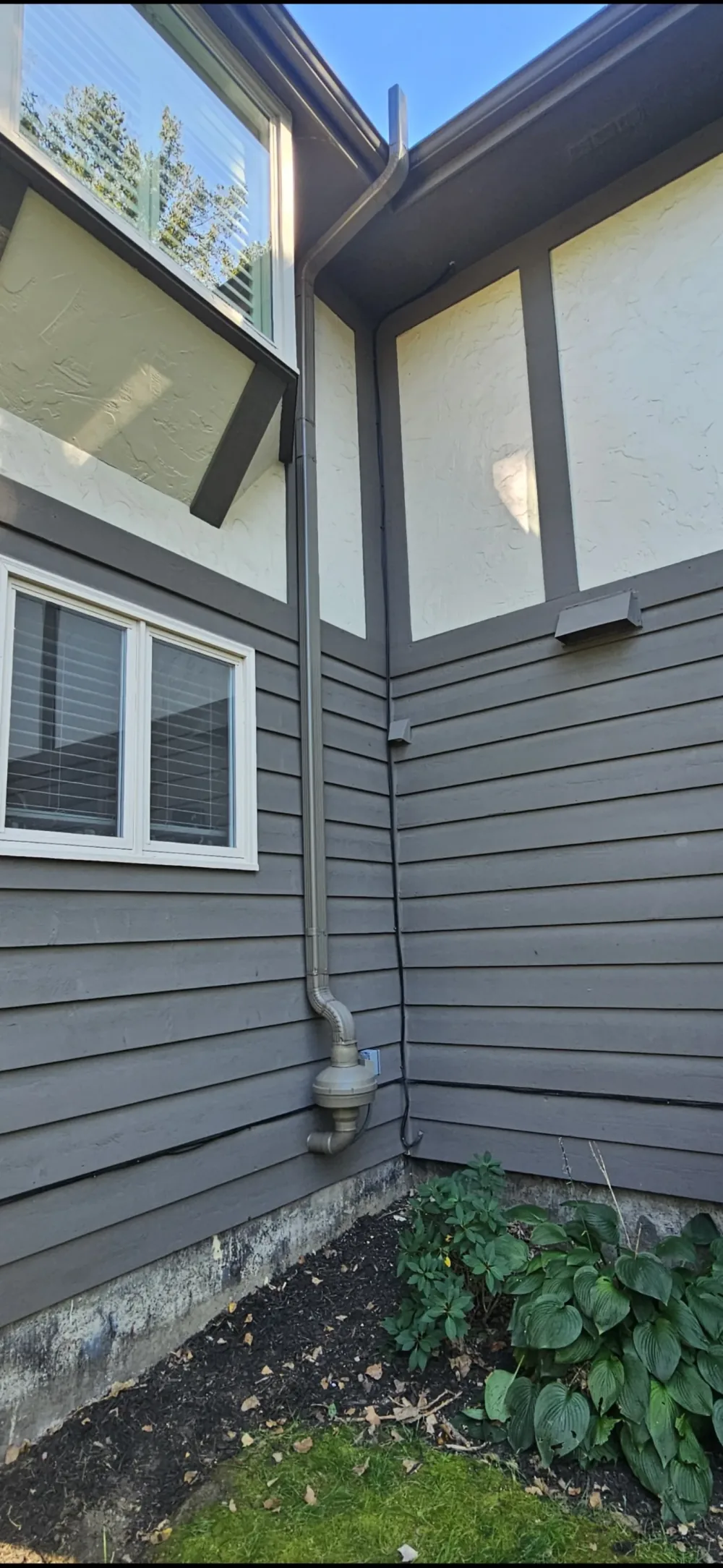
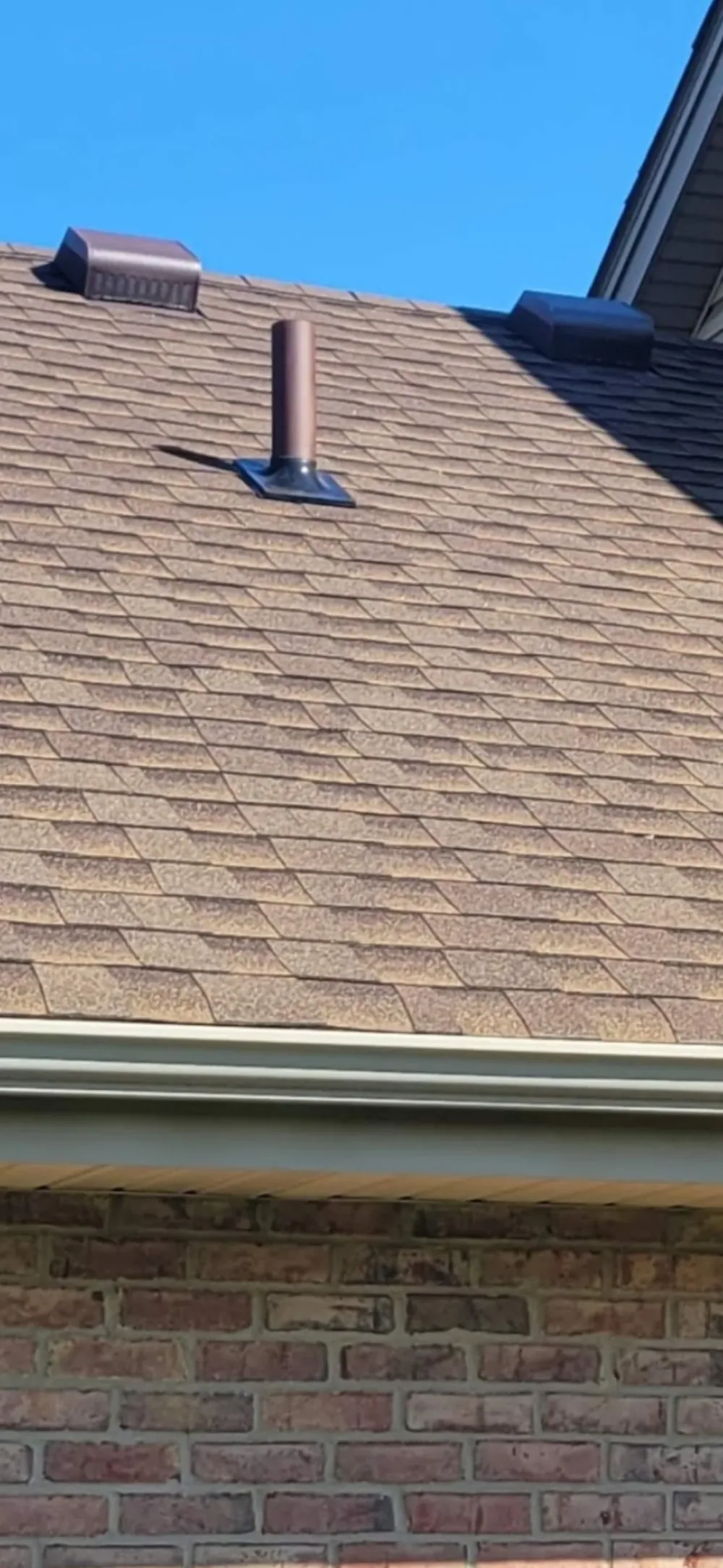
Finished systems on real homes
Every quote on this page ends in work that looks like this. Routed and finished to match the home, quiet, and barely noticeable from the curb.